
2026 EN

Setting Up in Spain: Spanish SL or Permanent Establishment?

When a foreign company decides to operate in Spain, one of the first tax and legal questions is whether to incorporate a Spanish limited liability company, known as an SL, or operate through a Permanent Establishment.

Both options allow an international business to carry out activities in Spain, but they have different legal, tax and administrative implications.

  1. Spanish SL

A Spanish SL is a separate legal entity incorporated in Spain. It has its own legal personality, accounts, tax obligations and liability.

Pros:

An SL offers a clear separation between the foreign parent company and the Spanish business. This can limit liability, provide a stronger local presence and make it easier to hire employees, sign contracts, open bank accounts and build credibility with clients, suppliers and institutions.

It may also be a more suitable structure for long-term projects, commercial operations and businesses planning to grow in Spain.

Cons:

Setting up and maintaining an SL involves formal incorporation, accounting, tax filings, annual accounts and corporate compliance obligations. It may also require more administrative management than other alternatives.

  1. Permanent Establishment

A Permanent Establishment allows a foreign company to operate in Spain without creating a separate Spanish company. It is generally created when the foreign company has a fixed place of business, a dependent agent or a certain level of activity in Spain.

Pros:

A Permanent Establishment can be a more direct way to start operating in Spain while keeping the business under the foreign company. It may be useful for specific projects, initial market testing or operations that do not require a fully independent Spanish entity.

Cons:

The foreign company remains directly exposed to the Spanish activity. This may involve higher legal and commercial risk for the parent company. In addition, the Permanent Establishment must still comply with Spanish tax, accounting and reporting obligations.

From a tax perspective, correctly determining the profits attributable to the Spanish Permanent Establishment can also be complex, especially where there are transactions between the head office and the Spanish activity.

Which option is better?

There is no single answer. The right structure depends on the nature of the activity, expected duration, commercial objectives, risk exposure, hiring plans, tax position and international structure of the group.

As a general rule, an SL may be more appropriate for a stable and long-term presence in Spain, while a Permanent Establishment may be considered for more limited or project-based activities.

Before starting operations in Spain, it is highly advisable to review both options from a legal, tax and practical perspective.

At MDG Advisors, we would be delighted to help you choose the right structure for your business in Spain.


When Does an Individual Become Tax Resident in Spain?

For individuals moving to Spain, one of the first tax questions to consider is whether they may become Spanish tax resident.

This is important because Spanish tax residents are generally taxed in Spain on their worldwide income, not only on income generated in Spain.

Under Spanish tax rules, an individual may be considered tax resident in Spain if any of the following criteria are met:

  1. More than 183 days in Spain

If a person spends more than 183 days in Spain during a calendar year, they may be considered Spanish tax resident.

Temporary absences may generally count as days spent in Spain, unless tax residence in another country can be properly proven.

  1. Main economic interests in Spain

A person may also become tax resident in Spain if their main economic activities or interests are located in Spain, either directly or indirectly.

This may include business activities, employment, investments or other relevant economic connections.

  1. Family ties

Spanish law also presumes tax residence in Spain when the individual’s spouse and dependent minor children habitually live in Spain, unless proven otherwise.

Becoming tax resident in Spain can have important consequences, including personal income tax obligations, reporting requirements for foreign assets and the need to review income received from other countries.

In international situations, Double Tax Treaties may help determine where a person should ultimately be treated as tax resident when more than one country claims residence.

For this reason, it is highly advisable to review the position before relocating, spending significant time in Spain or transferring business or family interests to Spain.

At MDG Advisors, we would be delighted to help you analyse your tax residence position and plan your move to Spain with clarity and confidence.


Genia

Introducing GENIA, the new artificial intelligence tool from MDG Advisors.
Designed to analyze, learn, and act to better serve our team.

GENIA optimizes processes, accelerates decision-making, and helps us deliver faster, smarter, and more strategic responses.

A tailor-made artificial intelligence solution, created from within and adapted to the real needs of our clients, just like all our services.

GENIA.
Much more than a name.

G — Generating value. Automating repetitive tasks so our team can focus on strategic advisory.


E — Operational efficiency.
Less mechanical work. More focus on what truly adds value.


N — Natural ease of use.
Simple, direct, and accessible for everyday work.


I — Applied intelligence.
Applied to the real processes of our firm.


A — Continuous adaptation.

Evolving alongside our clients and their needs.
GENIA.
Artificial intelligence in the service of human talent.

The 5% retention in the construction sector: tax treatment and specific reference to VAT

In the construction sector, it is common for the developer to withhold 5% of the value of the works certificates from the builder as a guarantee of proper execution. Although it is commonly referred to as a ‘withholding’, it should not be confused with a tax withholding. It is a contractual or legal guarantee intended to cover any defects, reworks, finishing touches or liabilities arising from the execution of the works. Law 38/1999 on Building Regulations provides that the annual guarantee for material damage arising from faults or defects in execution affecting finishing elements may be replaced by a withholding by the developer of 5% of the cost of the physical execution of the works. Therefore, its purpose is not to reduce the price, but to ensure the proper fulfilment of the contractor’s obligations.

Work in progress and completed work
The first relevant distinction is whether the work is in progress or completed. During construction, the builder usually issues partial certificates for the work carried out. In such cases, the developer may pay the certified amount, deducting the 5% retention. This amount remains outstanding until the works are accepted, the warranty period expires, or correct execution is verified. Conversely, when the works are completed, the retention must be settled: it may be released and paid to the builder, used in full or in part to cover proven defects, or definitively reduce the price if so agreed and duly documented.

Specific treatment under VAT
From a VAT perspective, the 5% retention requires an analysis of the accrual and the taxable amount. In general, Article 75 of Law 37/1992 on VAT establishes that the tax becomes chargeable when the goods are supplied or the service is provided. However, where advance payments are made prior to the completion of the transaction, VAT becomes chargeable at the time of receipt, but only on the amounts actually received. Likewise, Article 78 of the VAT Act provides that the taxable amount consists of the total consideration.
This rule must be applied with caution where amounts are withheld as a guarantee and are not collected at the time of certification.

The Directorate-General for Taxation, in Binding Ruling V0053-13 of 9 January 2013, has stated that, in the case of works certifications constituting advance payments, the VAT taxable amount must consist of the amounts actually received, excluding amounts withheld as a guarantee that have not been collected. Thus, if a certification amounts to €100,000 and the developer withholds 5%, paying only €95,000, the VAT corresponding to that advance certification should be calculated on €95,000, not €100,000. The situation changes upon completion of the works. At the time of handover, making the property available or final acceptance, if the amounts withheld still form part of the price owed to the builder, they must be included in the VAT taxable base, unless a reduction is applicable due to defects, breaches of contract or an agreement between the parties. If the retention is applied due to defects in the work, it will be necessary to analyse whether this constitutes a price reduction, compensation or a set-off of claims, as each scenario may have different tax consequences. If there is a definitive reduction in the price, Article 80 of the VAT Act may apply and, where appropriate, a corrective invoice may need to be issued.

The builder’s and developer’s perspective
For the builder, the retention directly affects their cash flow and the correct charging of VAT. It is advisable for invoices to distinguish between the certified amount, the retained amount, the taxable amount and the amount actually received. For the developer, the retention constitutes a guarantee, but not an automatic price reduction. If they decide not to release it, they must have sufficient contractual, technical and documentary backing.
Furthermore, in the execution of property works, the possible application of the reverse charge mechanism provided for in Article 84.1.2.f) of the VAT Act must be analysed, particularly in contracts between the developer and the contractor relating to the development, construction or refurbishment of buildings. Binding Ruling V2583-12 is relevant in this regard. In conclusion, the 5% withholding tax must be carefully documented in the contract, certificates and invoices. A clear distinction between work in progress and completed work, together with the correct treatment of VAT, avoids the advance payment of tax on amounts not yet received and reduces tax risks for builders and developers.

AI automation in the workplace

The expansion of automation and artificial intelligence (AI) is transforming the labour market at an unprecedented pace. Far from merely leading to job losses, this phenomenon is bringing about a profound reshaping of work, in which, whilst certain occupations are declining, new, more specialised and skilled professions are emerging.

In sectors such as manufacturing, logistics and customer service, repetitive and predictable tasks are increasingly being taken over by machines and algorithms; industrial robots, automated management systems and virtual assistants enable increased efficiency and reduced costs, which has led to the reduction of certain low-skilled operational roles.

However, this very transformation is driving job creation in areas that require more advanced skills and highly qualified staff, primarily in the technology sector. Roles such as artificial intelligence engineers, data analysts, cybersecurity specialists and software developers are now in greater demand than ever.

Furthermore, new hybrid professions are emerging that combine technical knowledge with human skills such as creativity, critical thinking and management. Experts agree that the impact of AI is not so much the destruction of jobs as their evolution. The main challenge lies in the adaptation of workers, companies and institutions, which must commit to continuous training and the acquisition of new skills so as not to be left behind, and in the solid and definitive implementation of AI within companies to ensure it delivers maximum performance.

In this context, education and vocational training play a key role. Retraining programmes, digital skills training and public policies geared towards labour transition will be essential to ensure that the benefits of automation are distributed fairly and efficiently.

Ultimately, artificial intelligence does not eliminate jobs, but rather redefines them. The future of employment will depend on society’s ability to adapt to this change and make the most of the opportunities offered by technology.

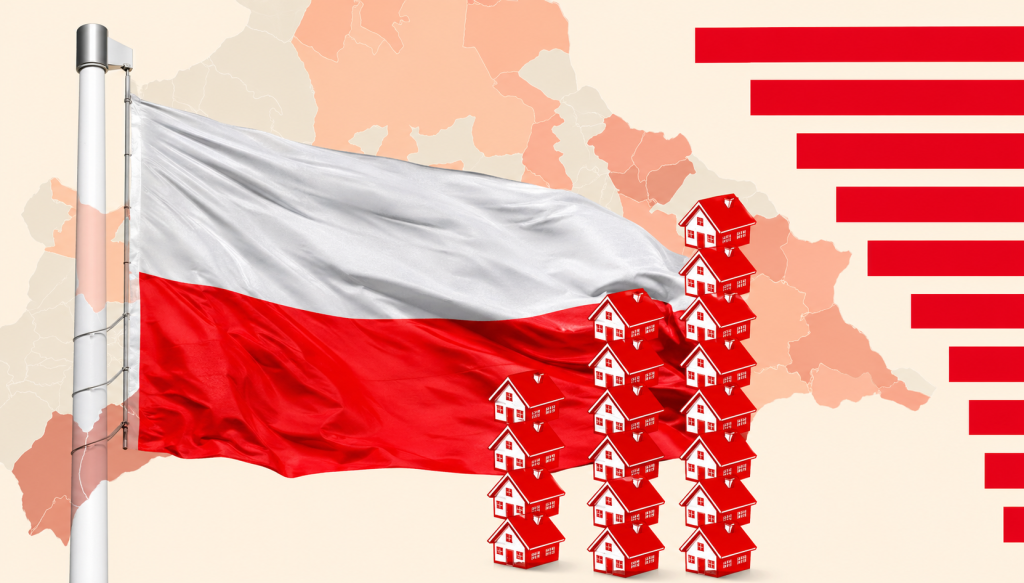
Polish Buyers Are Emerging as Key Players in Málaga’s Property Market

The real estate landscape in Málaga continues to evolve, with international demand playing an increasingly important role in shaping the market. Recent reports highlight a notable trend: Polish buyers are now among the top nationalities investing in residential properties across the province.

Traditionally, property purchases in Málaga have been dominated by buyers from countries such as the UK, Germany, and the Nordic regions. However, the growing presence of Polish investors signals a shift in buyer demographics. Attracted by the region’s climate, lifestyle, and strong investment potential, Polish nationals are increasingly choosing Málaga as a destination for both second homes and long-term investments.

This trend is not just reflected in market data—it is something we are experiencing firsthand. At MDG, we have observed a considerable increase in Polish clients over recent months. Their interest spans a wide range of property types, from coastal apartments to more exclusive developments, demonstrating both diversity in preferences and strong purchasing power.

Several factors may be driving this surge. Improved connectivity between Poland and southern Spain, rising disposable income, and a growing appetite for international real estate investment all contribute to Málaga’s appeal. Additionally, the city’s continued development, infrastructure improvements, and vibrant cultural scene make it an increasingly attractive destination for European buyers.

As Málaga strengthens its position as a leading real estate hub in southern Europe, the rise of Polish buyers is a clear indication of the market’s dynamic and international nature. For developers, agents, and investors alike, understanding and adapting to this evolving demand will be key in the months and years ahead.

At MDG, we remain committed to closely monitoring these trends and providing tailored services to meet the needs of our increasingly diverse client base.

Málaga boosts its tourism growth with longer stays and stronger international demand

Málaga begins 2026 with a more solid tourism performance: in March, the city recorded 149,893 hotel travellers and 312,095 overnight stays, representing a 1.88% increase in visitors and a 7.78% rise in nights. The average stay increased to 2.08 days (+5.58%), and hotel occupancy reached 85.7%, seven points higher than last year, reflecting higher‑quality tourism and stronger economic impact.

The international market continues to lead growth, with a 1.63% increase in travellers and a 9.42% rise in overnight stays. The UK and Germany remain the top source markets, while Asian markets show notable progress: China increased its overnight stays by 17%, and South Korea grew 22% in travellers and 33% in nights. Nationally, Andalucía and Madrid declined, but Catalonia and the Valencian Community grew. The first quarter closed with a 4.8% increase in travellers and an 8.34% rise in overnight stays, consolidating an expanding tourism model.

The Spanish Constitutional Court Upholds the “Reference Value”: Analysis of Judgment 13/2026

The Spanish Constitutional Court has issued a landmark decision resolving one of the most significant controversies in recent real estate taxation: the validity of the so-called “reference value” (valor de referencia) as a taxable base.
In its Judgment 13/2026, dated 12 February 2026, the Court confirms the constitutionality of the system introduced by Law 11/2021, concluding that its application in Transfer Tax (ITP) and Inheritance and Gift Tax (ISD) does not infringe the constitutional principle of economic capacity.

Background of the dispute:

The constitutional challenge originated from a case brought before the High Court of Justice of Andalusia, which questioned whether the use of the reference value as a taxable base could lead to taxation disconnected from the taxpayer’s actual economic capacity.

The core concern was that this system replaces the traditional market value with an objective value determined administratively, without taking into account the specific characteristics of each property. As a result, taxpayers could be required to pay taxes based on values higher than the actual transaction price.

The reference value as an objective valuation method:
The reference value is an administrative value determined by the Spanish Cadastre based on real market data, particularly notarised property transactions.
Its introduction marked a significant shift in the Spanish tax system: moving from a model based on the “real value” of the property (subject to subsequent verification by the tax authorities) to a system of prior objective valuation.
In practice, the reference value operates as a minimum taxable base in real estate transactions.

The Court’s reasoning:
The Constitutional Court upholds the system based on several key arguments:

1. Compatibility with the principle of economic capacity
The Court considers that the reference value does not tax fictitious wealth, as it is based on average
market values and includes mechanisms to ensure that it does not exceed market value.
2. Legitimacy of objective valuation methods
The Court reiterates its established doctrine that the legislator may adopt objective methods to determine the taxable base for reasons of administrative efficiency and legal certainty, provided such methods are not arbitrary.
3. Availability of legal remedies for taxpayers
A crucial factor in the Court’s reasoning is that taxpayers retain the right to challenge the reference value if they consider it does not reflect the true value of the property, by providing appropriate evidence.

Ongoing practical concerns:
Despite the Court’s endorsement, several practical issues remain:

– The reference value is inherently standardized and may not reflect the specific characteristics of individual properties.
– The system effectively shifts the burden of proof to the taxpayer, who must challenge the value if they disagree.
– Disputing the value often requires independent valuation reports, increasing costs and complexity.

Therefore, while constitutionally valid, the system may continue to generate disputes in practice.

Practical implications for taxpayers and advisors:
This judgment has important implications:

– It strengthens the legal certainty of the reference value system.
– It consolidates its role as a key element in Spanish real estate taxation.
– It highlights the importance of reviewing the reference value prior to any transaction.

From a practical standpoint, taxpayers and advisors should anticipate potential discrepancies and ensure proper documentation of the property’s market value where necessary.

Conclusion:
Judgment 13/2026 of the Constitutional Court provides definitive legal support for the use of thereference value as a method for determining taxable bases in real estate taxation.
However, its practical application will likely remain contentious in cases where the administrative valuediverges from the economic reality of the transaction.
In this context, careful tax planning and professional advice remain essential to mitigate risks and ensure compliance.

Extension of the Suspension of the Dissolution Cause Due to Losses Until 2026

In March 2026, a new extension has been approved regarding one of the most relevant corporate measures introduced during the COVID-19 pandemic: the exclusion of certain losses for the purposes of determining whether a company must be dissolved.

Specifically, Royal Decree-Law 7/2026, of March 20, has reinstated the suspension of the legal ground for dissolution set out in Article 363.1.e) of the Spanish Companies Act, extending its application until the end of the financial year starting in 2026.

What does this measure consist of?

As a general rule, a company must be dissolved when its losses reduce its net equity to an amount below half of its share capital. However, in response to the economic impact of the pandemic, an exception was introduced to prevent otherwise viable companies from being forced into dissolution due to temporary losses.
Under this exceptional regime, losses incurred during the financial years 2020 and 2021 are not taken into account when assessing whether this dissolution cause applies.

Evolution of the measure:

This is not a new measure, but rather part of an exceptional legal framework that has been extended several times:

– Initially introduced by Law 3/2020 in response to COVID-19.

– Subsequently extended through various regulations in 2021, 2022, and 2025.

– Now extended again by Royal Decree-Law 7/2026.

This continued extension reflects the ongoing economic effects of the pandemic on businesses.

Until when does it apply?

The key update is that the exclusion of losses from 2020 and 2021 now remains in force until the end of the financial year starting in 2026.
This means that, when assessing a company’s financial position in financial years such as 2022, 2023, 2024, 2025, or even 2026, those losses must be disregarded.
However, if after excluding these losses the company’s net equity still falls below half of its share capital, the legally required measures must be adopted (such as calling a shareholders’
meeting, recapitalization, or dissolution).
The regulation also introduces additional measures, including the possibility to restate annual accounts in certain cases, as well as greater flexibility in convening shareholders’ meetings, providing companies with more room to react.

Conclusion:

The extension of this measure provides relief for many companies, as it prevents extraordinary pandemic-related losses from automatically triggering a legal cause for dissolution.
Nevertheless, it remains essential to carry out a thorough analysis of the company’s financial position, taking into account both this exceptional regime and the general legal obligations, in order to avoid potential liability for directors.

Personal Income Tax 2025: All the key changes you should know before filing

The personal income tax return for the 2025 tax year comes with significant changes that should be understood before submission. The Spanish Tax Agency has introduced new measures affecting both how returns are filed and the deductions that may be applied, which can directly influence the final outcome. Below, we clearly and practically explain the key points to consider.

Changes to the self-assessment:
Improvements have been introduced to the tax return form with the aim of facilitating corrections and strengthening oversight:
– Cancellation of previously submitted returns: a new box allows taxpayers to void a return submitted in error when they were not required to file.
–  Adjustment of self-employed contributions (RETA): as a result of the regularisation of RETA contributions from previous years, any differences will be reflected as a higher or lower deductible expense in the current tax year.
– Thermal Social Bonus: a specific box has been added to declare this public aid.
–  Prizes (games, raffles and competitions): new boxes allow better identification of this
type of income, whether for promotional purposes or not.
– Mandatory control boxes: the system will include alerts that taxpayers must tick before submitting the return, requiring certain aspects to be reviewed.

Reductions:
– Removal under the objective assessment scheme (modules): reductions applicable for the purchase of agricultural diesel and fertilisers are eliminated.
This represents a reduction in tax benefits for those taxed under this regime.

Deductions from the gross tax liability:
– Energy efficiency improvements: the deadline for applying this deduction has been extended, encouraging home improvements.
– Electric vehicles and charging points: the deduction is extended until 2026.
–  Gym or sports centre expenses: a new deduction of up to €100 per taxpayer.
–  Coeliac disease: a new deduction to offset the higher cost of gluten-free products, up to €100 per affected family member diagnosed with the condition.
– Veterinary expenses: a temporary deduction of up to €100.
– Childcare (DAMA): an increase in the deduction for expenses in nurseries and authorised early childhood education centres, following an amendment to Article 69.9 of the Personal Income Tax Regulations as a result of Supreme Court Judgment 8/2004 of 8 January.
– Low employment income (≤ minimum wage): a deduction of up to €340 for lower- income earners.

Taxation of savings:
The tax rate increases to 30% for amounts exceeding €300,000 in the savings tax base. This measure increases the progressivity of the tax system for higher income levels.