admin

📢 A Step Forward in Tax Equality for Non-EU Residents in Spain.

On July 28, Spain’s National Court recognized the right of non-EU taxpayers to apply deductions in the Non-Resident Income Tax (IRNR) for rental properties, aligning their treatment with that of EU residents.

Until now, non-EU residents were unable to deduct expenses (maintenance, local taxes, etc.), creating a clear disadvantage compared to EU citizens and discouraging foreign investment in Spain.

In a landmark decision, the court ruled that this exclusion violated both the principle of free movement of capital under the TFEU and the non-discrimination clause of the agreement with the U.S.

🔎 While this ruling is not yet binding case law — pending confirmation by the Supreme Court — it sets an important precedent toward fairer taxation and opens the door for non-EU taxpayers to rectify past tax returns.

This is a significant step towards a Spanish tax framework that is more equitable and aligned with the principles of a competitive, international market.

https://www.linkedin.com/feed/update/urn:li:activity:7365656298429865985

🌐 From a budding tech scene to a global hub.

When María first arrived in Málaga over 20 years ago, the IT and tech industry was still in its infancy — few startups, little investment, and almost no institutional support.

Fast forward to today, Málaga stands shoulder-to-shoulder with cities like Barcelona, Madrid, and London. 🚀
The city now boasts a thriving ecosystem of talented engineers, hungry entrepreneurs, and endless opportunities for innovation.

💡 A true example of how vision, persistence, and the right environment can transform a local market into an international benchmark.


✨ From London to Northern Spain, driven by strategic decisions and business leadership.

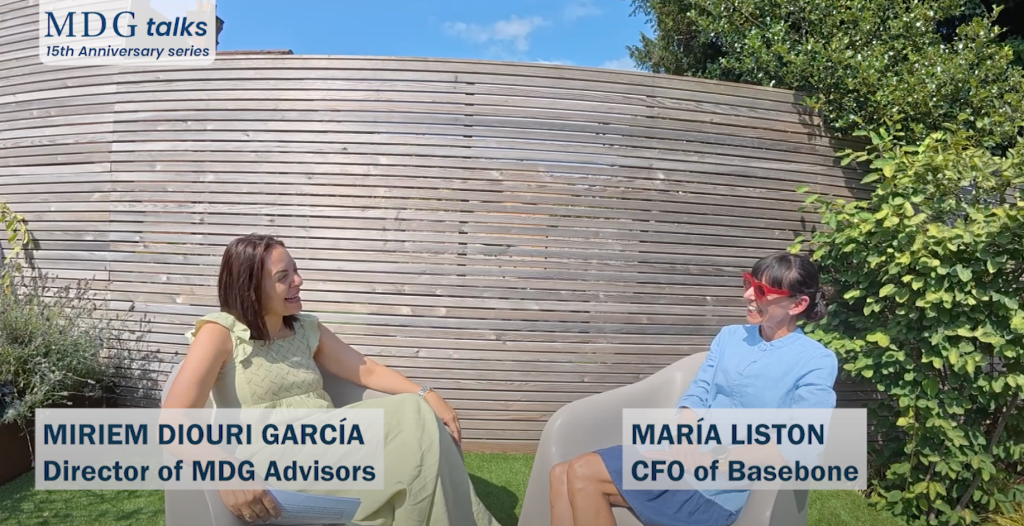
In this interview, María, CFO of Basebone, shares her professional journey, her perspective on the role of small and medium-sized enterprises, and how working with MDG Advisors has supported their growth.

🚀 We talk about leadership, international expansion, and how connecting cultures and markets can open up new opportunities.

💡 An inspiring conversation for those who believe that strategy and passion for teamwork are key to business success.

🎥 Watch the full interview in the video.

#Leadership #Business #CFO #Strategy #InternationalExpansion #Basebone #MDGAdvisors #Growth

 

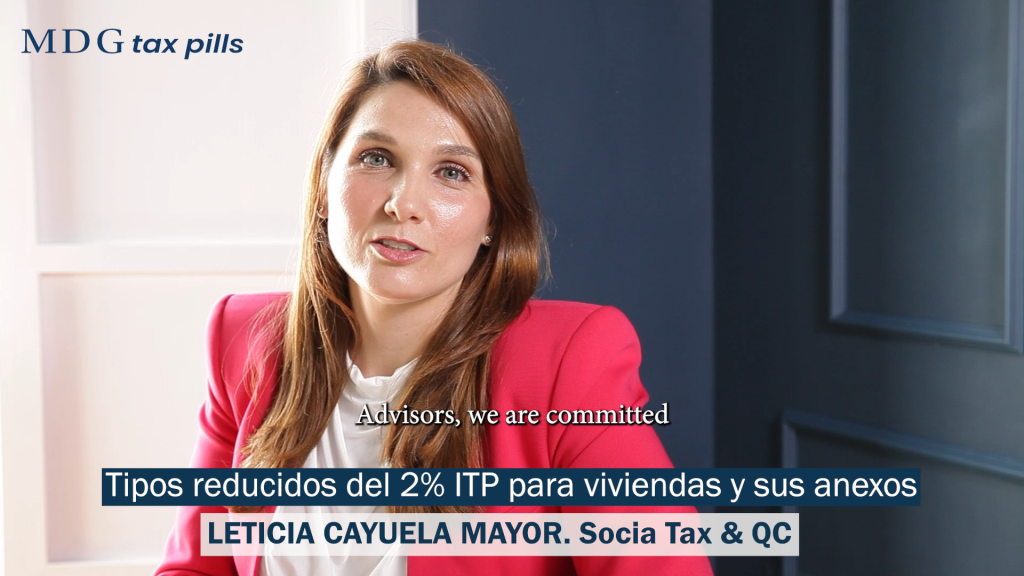
#MDGPill 2% Reduced ITP Rates for Homes and Their Annexes.

At MDG Advisors, we are committed to providing proactive advice. In light of growing real estate activity in Andalusia, we share a recent clarification by the Tax Agency of the Andalusian Regional Government on the 2% reduced Transfer Tax (ITP) for professionals purchasing property for resale (under Article 44 of Law 5/2021).

The new interpretation confirms that the 2% rate applies not only to the home but also to its annexes—up to two parking spaces and one storage room—provided all are acquired in a single public deed and intended for resale.

This means a 5% ITP saving on annexes and supports the revitalization of the real estate market.

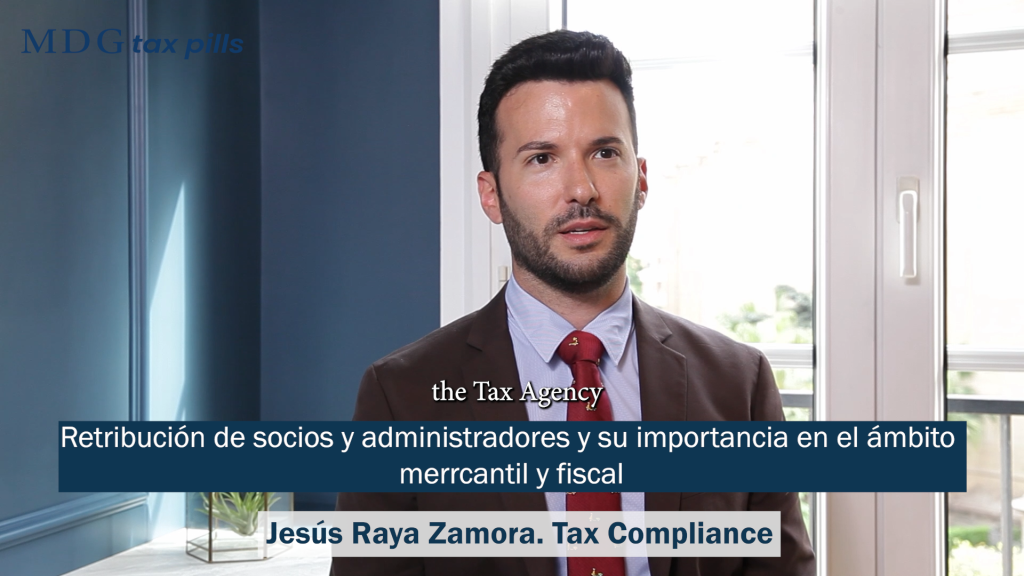
#MDGPill Remuneration of Shareholders and Directors and Its Importance in the Corporate and Tax Context

In this video, Jesús Raya Zamora addresses one of the most relevant and closely monitored topics by the Spanish Tax Agency in the business world: the remuneration of shareholders and directors, and its proper management from both corporate and tax perspectives.

He explains that it’s not just about how much is paid, but how that remuneration is structured legally, fiscally, and in accounting terms. It must be included on the payroll and is taxed either as employment income or as professional income, depending on the relationship with the company.

Whether this remuneration is deductible for Corporate Tax purposes depends on several factors: the type of role, whether it is included in the company’s bylaws, the existence of an actual employment relationship, and compliance with the legal requirements.

At MDG, we help companies properly structure this aspect, optimizing the tax burden, ensuring full compliance with current regulations, and minimizing risks in the event of potential inspections.

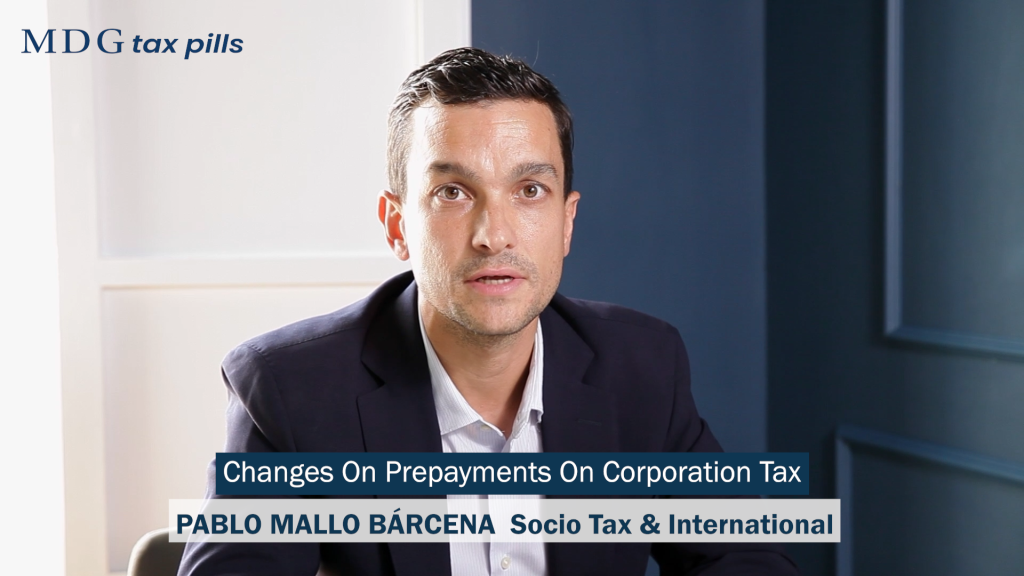
#MDGPill Changes On Prepayments On Corporation Tax

At Spain Enterprises, we explain the two main methods for calculating corporate tax in Spain:

  1. Tax on the Tax Base – Applies to the latest taxable base, following current regulations. It’s the standard method used by most companies.

  2. Tax on Adjusted Profits – Calculates tax based on adjusted corporate profits, applying a set percentage depending on the type of corporation.

Choosing the right method affects your tax payments and can lead to savings. If your company switches between methods, you may also notice changes in your tax amount.

Need help choosing the best option? Our team is here to support you.

#MDGTalk 15 Years Are Just the Beginning

At MDG Advisors, we proudly celebrate 15 years of a journey grounded in values that continue to define us: transparency, honesty, and excellence. From our very first client to the 450+ we now serve, our mission has always been to deliver high-quality service with real added value.

Our commitment to young talent has been key. We work closely with universities to identify promising professionals and train them from the ground up, instilling our culture and work ethic. Continuous learning remains at the heart of our team’s growth and specialization.

We look to the future with excitement, confident that sustainable, quality-driven growth is the way forward. These 15 years have been just the beginning of a project that continues to evolve with the same passion it started with.

#MDGPill Importance of properly authorizing your contribution base as a self-employed worker in Spain.

Alexa Morán Cruz talks about the importance of properly authorizing your contribution base as a self-employed worker in Spain.

Since 2023, freelancers must contribute to Social Security based on their actual net income. This marks a major shift from the previous system, where people could choose their base freely—often below what they should have contributed.

With the new model:
✅ Those who earn less, pay less.
✅ Those who earn more, contribute more.
✅ You can adjust your base up to 6 times a year to match income fluctuations.
✅ At year-end, Social Security reviews earnings and adjusts contributions if needed.

A reform aimed at fairness, better future benefits, and a more sustainable system for everyone.

#MDGTalk The Importance of New Technologies at MDG

Miriem Diouri speaks with Jesús Raya Zamora about the essential role that artificial intelligence and new technologies play in the daily operations of the MDG firm. They discuss how the team is adopting AI-based tools to optimize internal processes while maintaining professional judgment.

The conversation also touches on the common fear that AI might replace experts, clarifying that its role is to support, not substitute. They emphasize that mastering these tools is no longer just an advantage—it’s a necessity. They also highlight the importance of upholding values like transparency, ethics, and data protection in this new digital environment.

Moreover, they agree that the real risk doesn’t lie in the technology itself, but in failing to adapt to it. In a changing professional landscape, integrating innovation with responsibility and long-term vision is key to continuing to provide high-quality service.

Spain’s Tax System: Hidden Strengths in a Competitive Global Landscape.

The fiscal discourse in Spain has historically oscillated between criticism of excessive tax pressure and the aspiration to create a competitive environment for global businesses and professionals. However, beyond the noise, the Spanish tax system offers lesser-known but highly effective tools for those who choose to start a business, invest, or relocate their activities to the country.

Spain, contrary to stereotypes, has well-established tax optimization instruments that allow it to compete with traditionally more aggressive jurisdictions such as Ireland or the Netherlands. Among these, three pillars stand out: the reduced 15% corporate income tax rate for new companies, the tax regime for inbound taxpayers (known as the “Beckham Law”), and the regime for Holding Companies of Foreign Securities (ETVE).

A 15% Rate to Promote Real Economic Activity

Companies that begin their economic activity for the first time can benefit from a 15% corporate tax rate during the first tax year with a positive taxable base and the following one. This incentive is not new but remains underused. It applies generally and not exclusively to tech startups, although it has gained visibility through initiatives aimed at entrepreneurship.

In a European context where the average nominal corporate tax rate hovers around 21–22%, this measure positions Spain competitively in attracting real business initiatives. We are not talking about large offshored corporations, but about projects that are born here—with real activity, local employment, and long-term commitment.

The Beckham Law: Taxation to Attract International Talent

The tax regime applicable to workers moving to Spain—known as the Beckham Law since its introduction in 2004—allows them to be taxed only on Spanish-sourced income for six years, applying a fixed rate of 24% up to €600,000. Although initially aimed at professional athletes, it has since been extended to a broader range of profiles, including international executives, startup founders, and remote workers.

This regime has gained renewed momentum since the introduction of the digital nomad visa in 2023, which facilitates legal residence in Spain for international professionals working remotely for foreign companies. This expansion has allowed the inbound tax regime to become not only a tool for attracting corporate talent, but also a clear incentive for highly qualified tech, creative, and freelance profiles.


Data from the first year indicates more than 2,500 applications under this new immigration framework, confirming that Spain is consolidating its position as a competitive destination not only for its lifestyle but also for its smart, targeted tax regime.


ETVE: The “Invisible” Holding Vehicle


Less known outside of tax advisory circles but central to the architecture of international corporate groups, the regime for Holding Companies of Foreign Securities (ETVE) allows Spanish-resident companies to receive dividends and capital gains from foreign subsidiaries without being taxed on them, provided certain participation and transparency requirements are met.

This regime is not new, but it has proven robust under EU and OECD standards. It enables Spain to function as an international investment coordination center—similar to Luxembourg or the Netherlands—but with added advantages: an extensive network of double taxation treaties, access to skilled talent, political stability, and a quality of life that serves as an economic argument in itself.

A Tax Framework That Competes on Its Own Terms

Spain does not compete using the same mechanisms as low-tax jurisdictions—nor does it need to. Its fiscal appeal lies in a technical, targeted approach: selective incentives, with oversight, aimed at real economic activity. It’s not a flag-waving policy, but an effective tool for those who know it and know how to use it.

Ultimately, there is ample room for tax optimization in Spain that aligns fully with both national and international regulations. The challenge, more than creating new advantages, is to increase awareness of those that already exist, simplify their practical application, and project the image of a country that can compete—with its own identity—in the global race for capital and talent.


Miriem Diouri García.