
admin

Import VAT Deferral in Spain: Application Period Open in November.

Companies that carry out import operations in Spain may benefit from the Import VAT Deferral Scheme (IVA diferido), which allows import VAT to be declared and deducted in the monthly VAT return rather than being paid at customs. This option can offer a significant cash-flow advantage, as it eliminates the need for an upfront VAT payment upon importation.

Key Features of the Import VAT Deferral Scheme

Under the deferral system, import VAT amounts are declared in the monthly VAT return (Form 303) and deducted at the same time. In practice, this means that no actual cash outflow occurs for the import VAT, making it a cash-neutral process for the importer.

The application period is open during the month of November, and the scheme will take effect from January for approved applicants. Companies must be registered in the monthly VAT return system (REDEME) to qualify for the regime. 

Practical Considerations for Importers

Once the import VAT deferral system is applied, several operational points should be taken into account:

1. No changes required in customs declarations. 

It is not necessary to indicate this option in import declarations. The customs clearance system automatically verifies, at the time of DUA admission, whether the importer has opted for VAT deferral.

2. Inclusion in the VAT return.

The VAT amounts assessed by the Tax Authorities must be included in the VAT return corresponding to the period in which the import clearance (“levante”) takes place.

3. Compliance and penalties.

Any import VAT amounts notified during a month but not included in the corresponding VAT return will automatically enter the enforcement process (periodo ejecutivo de cobro) on a FIFO basis.
Moreover, the omission or incorrect reporting of import VAT amounts liquidated by the Administration may constitute a tax infringement, potentially subject to penalties.

Advantages of the VAT Deferral System

  • No advance payment of VAT at customs.
  • Immediate offset in the monthly VAT return.
  • Improved cash flow and liquidity management.
  • Simplified import procedures.

How to Apply

Applications for the import VAT deferral regime must be submitted to the Spanish Tax Agency during November. The scheme will take effect from January of the following year.

If your company imports goods and wishes to take advantage of this scheme, or if you need advice on the procedure, please contact our firm. Our team will be happy to help you manage your application and answer any questions you may have.

Marina Guerrero Castronuño. 



The Future of Professional Firms in Marbella

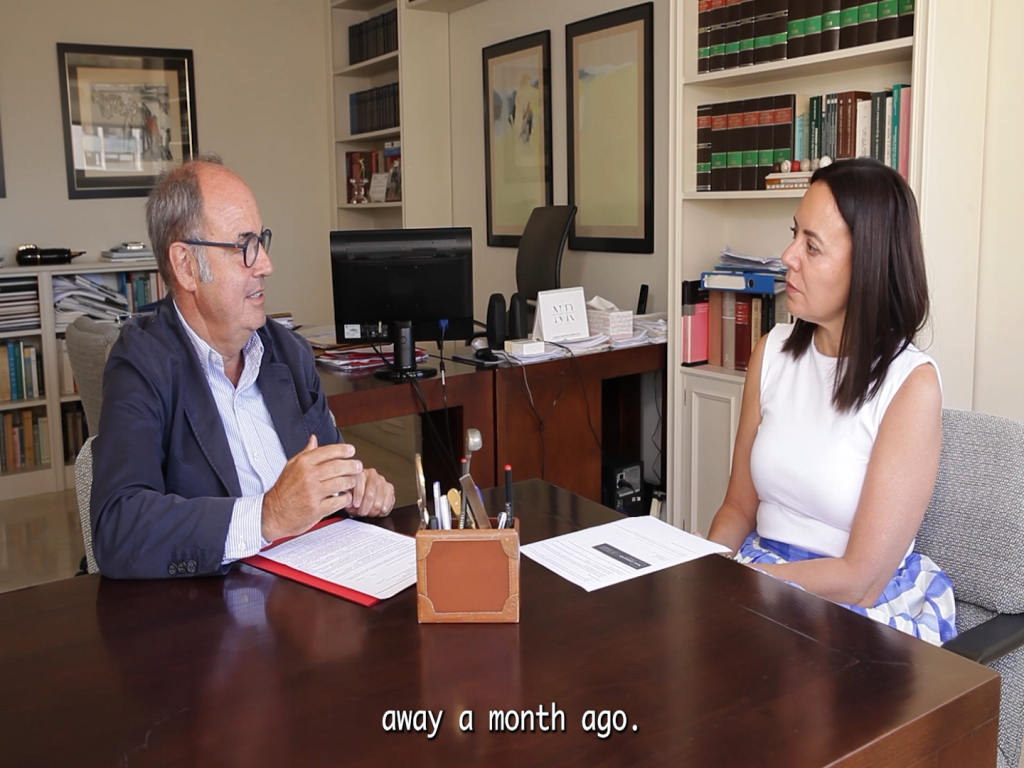
In this interview, Rafael shares a clear and insightful vision of the future of professional firms in Marbella, particularly highlighting the role of boutique firms like ours.

Amid the growth of large firms and the increasing digitalization of the industry, more and more clients value the personal, close, and direct approach that defines boutique practices. In a region like the Costa del Sol —where cultures, languages, and lifestyles from around the world converge— personalized attention has become a true symbol of trust and professionalism.

Today’s clients are looking for more than technical expertise: they seek guidance, reassurance, and a genuine human connection. That’s why firms that provide comprehensive, hands-on service —from the very first contact to the final resolution— are the ones with the strongest outlook in the local market.

Rafael emphasizes how this approach builds long-lasting relationships of trust, offering invaluable value both to the client and to the professional. In an environment where artificial intelligence and automation are taking an increasingly prominent role, the human factor remains essential.

This conversation reminds us that true luxury lies not only in results, but also in dedication, empathy, and personal commitment to every client.

Verifactu: new invoicing requirements in Spain

Starting January 2026, all companies operating in Spain will be required to issue their invoices using software certified by the Spanish E-revenue system, under the new Verifactu regulation.

Just like in other EU countries such as Belgium, this change aims to increase transparency, improve digital efficiency, and reduce tax fraud.

If your company operates in Spain, now is the time to:

  • ✅ Review your invoicing system

  • ✅ Contact your software provider

  • ✅ Ensure compliance with Verifactu certification

Preparing ahead will help you avoid disruptions and guarantee a smooth transition to the new invoicing standards.

Education and Values: The Pillars of Professional Excellence

In the legal and economic world, true excellence depends not only on technical expertise but also on personal values and the ability to understand people. In a recent conversation, Rafael and Miriam agreed that the profession requires more than degrees —it calls for vocation, empathy, and a continuous willingness to learn.

For young professionals starting their careers in Marbella and the Costa del Sol, solid education is the first step. Understanding how this region operates —shaped by foreign investment, cultural diversity, and a dynamic business environment— is just as important as mastering theory or practice. Knowing the local context enables professionals to provide tailored, effective, and client-centered service.

Another essential pillar is active listening. In an age dominated by technology and artificial intelligence, listening more than speaking has become a true strength. Only by observing and understanding clients can professionals identify their real needs and offer genuinely human value —something no digital tool can replace.

Above all, they highlight the importance of values: sincerity, honesty, and consistency. These principles build trust and sustain a lasting career. Ultimately, practicing with integrity and purpose not only ensures success but also brings the fulfillment that comes from serving others with authenticity.

How to inyect funds in a Spanish Limited company ?

In the real estate business, especially when dealing with Spanish companies, one of the most common questions we receive is:
“What is the best way to inject funds into a Spanish Limited Company — through a loan agreement or a capital contribution?”

Both methods are valid, but they have different financial and tax implications depending on the company’s structure, objectives, and tax residence.

1. Loan Agreements
Funds injected through a loan are recorded as a liability in the company’s accounts. Interest may be payable to the lender and could be deductible or taxable depending on the jurisdiction. In some cases, repayment or interest may be restricted or subject to withholding taxes.

2. Capital Contributions
Capital contributions increase the company’s equity. They usually do not require repayment or interest, but can affect the shareholding structure and have corporate tax implications.

Choosing the Right Option
The decision depends on tax efficiency, fund repatriation, and the company’s long-term strategy. Because rules vary by country, it is essential to consult a qualified tax advisor before deciding.

Fontán and Zubizarreta: 30 Years of Legal Excellence in Marbella

With more than three decades of experience, Fontán & Zubizarreta Lawyers has established itself as one of Marbella’s most respected law firms. In such a dynamic and cosmopolitan city, its history reflects commitment, professionalism, and a deep connection with the local community. The firm has accompanied Marbella’s evolution —from challenging periods to its consolidation as an international destination— growing alongside the city and adapting to the changing realities of the legal world.

Inspired by key figures such as Lorenzo Ruiz Barrero, who shaped a way of practicing law based on clarity, closeness, and excellence, the team at Fontán & Zubizarreta remains firmly client-focused. “Listening is just as important as advising,” say the partners, convinced that trust and empathy are the cornerstones of quality legal service. Their approach combines tradition and experience with a modern outlook, providing effective solutions for an international and demanding clientele.

Should a Non-Resident Heir Pay Taxes in Spain?

This is one of the most common questions we receive at MDG Advisors, especially from clients with assets or family members in different countries.

However, the answer is not as simple as a “yes” or “no.” It depends on two main factors: where the assets are locatedand the tax residency status of the deceased.

👉 If the assets are located outside Spain, the non-resident heir is not required to pay taxes in Spain.

👉 If the assets are located in Spain, it is necessary to analyze the status of the deceased:

  • Deceased non-resident: The heir must file the state-level self-assessment, and may choose the autonomous community where the value of the assets would have been highest.

  • Deceased Spanish tax resident: The heir must also file the state-level self-assessment, but may apply the regional regulations corresponding to where the deceased resided during the last five years.

In short, the taxation of international inheritances requires a detailed analysis of each individual case. At MDG Advisors, we help our clients understand their tax obligations and optimize their tax burden both in Spain and abroad.

Time Recording: Is Electronic Clock-In Mandatory?

In recent months, many companies have been receiving communications or recommendations from external suppliers who insist on the supposed mandatory nature of electronic time recording. This situation has caused some confusion, especially among SMEs and self-employed workers with employees. However, as of today, current labour legislation in Spain does NOT require clocking in to be done using electronic systems.

📌 What does the current legislation say?

Article 34.9 of the Workers’ Statute, following its amendment by Royal Decree-Law 8/2019, establishes that all companies must ensure the daily recording of the working hours of their employees. But the important thing is this:

🔍 The law does not establish a mandatory format for such recording.

This means that time control can be carried out either electronically or on paper, provided that it is reliable, accessible and available for possible labour inspections for at least four years.

📄 Is paper recording valid?

Yes. Manual paper recording is still perfectly legal, provided that it meets the following requirements:

  • It records the start and end times of each employee on a daily basis.
  • It is accessible to the employee, the company and the Labour Inspectorate.
  • It is kept for the legally established period.
  • It is signed or validated by the employee.

🚫 What about external platforms that require it?

Many companies that provide HR or occupational risk prevention software are promoting the implementation of digital clocking-in systems, presenting them as ‘mandatory by law’. Although these systems can offer management and control advantages, they are not legally required.

✅ Conclusion

To date (October 2025), there is no regulation requiring companies to implement an electronic time recording system. What is mandatory is to keep track of working hours, and this can be done manually, on paper or using digital tools, depending on the reality and needs of each company.

Aaron Cheung Gallardo.


🎉 Celebrating 15 Years of MDG Advisors!

A huge thank you to our team, clients, and partners for being part of this incredible journey. Here’s to many more years of growth, innovation, and shared success!
#MDGAdvisors #15Years #Anniversary #Teamwork #Innovation

Lease with option to purchase: tax obligations for non-residents in Spain

Real estate investment in Spain by non-residents has become increasingly important in recent years. Many owners opt for contractual formulas that allow them to profit from their properties without giving up the possibility of a future sale. One of the most commonly used is the transfer of use with option to purchase, a concept that combines leasing with the transferee’s right to purchase the property within a specified period. In this article, we take an in-depth look at how income from this type of contract is taxed and what is involved in filing Form 210, in accordance with the provisions of the Directorate-General for Taxation (DGT) in its Binding Ruling V1141-24.

The transfer of use with option to purchase consists of a contract whereby the owner of a property transfers its use to a third party, usually through a lease, also granting them the right to purchase it in the future. This right can be exercised within a specified period and under previously agreed conditions. During the transfer period, the transferee pays a periodic rent for the use of the property. Additionally, they may pay an initial amount—known as an option premium—which guarantees them the right to purchase the property in the future. This premium, although not constituting periodic rent, has direct tax relevance.

When the owner of the property is not a tax resident in Spain, the income obtained from the transfer of use of a property located in Spanish territory is considered income obtained in Spain. Therefore, it is subject to Non-Resident Income Tax (IRNR). This includes both the periodic income derived from the use of the property, which is considered real estate capital gains, and the amount received for granting the option to purchase, which is considered a capital gain. Both types of income must be declared using Form 210, although with different deadlines and criteria.

The amount received for granting the right of first refusal cannot be considered a simple advance on the sale price. It is a change in assets that generates a gain for the owner and, as such, must be taxed in Spain. The capital gain is determined as the difference between the amount received for the right of first refusal and the expenses and taxes paid by the owner in relation to said concession. The non-resident owner must file Form 210 within one month of the date on which the amount is received. This declaration is made as a capital gain obtained without the mediation of a permanent establishment. The applicable tax rate is 19% for residents of European Union countries, Iceland, or Norway, and 24% for residents of other countries.

If the transferee decides to exercise their right and the sale is formalized, the non-resident owner generates a second capital gain, this time from the transfer of the property. This transaction must also be declared using Form 210. The capital gain is calculated as the difference between the transfer value—that is, the agreed sale price, which may include periodic rents and the option premium if they have been deducted from the price—and the acquisition value, which includes the original purchase price of the property, acquisition costs (notary, registration, taxes), and any investments and improvements made. The declaration must be made within three months of the end of the month in which the sale is formalized.

If the option premium has already been declared as a capital gain at the time of its granting, and this is included in the sale price, it is essential to avoid double taxation on the same amount. To do this, it is recommended to subtract the amount already declared from the transfer value and provide a copy of Form 210 previously submitted for the option premium.

In order to correctly comply with the tax obligations arising from this type of contract, it is essential to properly identify each type of income, file Form 210 within the established deadlines, keep all contractual documentation, and consult the double taxation agreements between Spain and the owner’s country of residence. Leasing with an option to purchase is an effective tool for making real estate in Spain profitable, but proper tax management is key to avoiding penalties, errors, or double taxation. Both the option premium and the subsequent sale generate tax obligations that must be met with precision. Having expert advice and drafting contracts clearly can make the difference between a profitable transaction and an unexpected tax burden.

Teresa Romero Navas