

2025 ENG

REDEME: An opportunity to optimize monthly VAT refunds.

When it comes to a company’s tax management, one of the areas that can have the greatest impact on cash flow is the recovery of input VAT. In this context, the REDEME (Monthly VAT Refund Register) is a key tool for companies that regularly have credit balances and want to improve their liquidity without having to wait until the end of the fiscal year.

What is REDEME?
REDEME is a special voluntary scheme that allows VAT taxpayers to request a monthly refund of the tax instead of waiting until the fourth quarter of the year. It is particularly useful for companies that:
Make significant investments subject to VAT. Export or sell mainly abroad (exempt transactions without the right to deduction). Regularly accumulate credit balances. To qualify for this scheme, the company must submit form 036 during November of the previous year, or when starting its activity, in the case of new taxpayers.

Key advantages of REDEME:
1. Improved liquidity
The main advantage is obvious: it allows VAT paid each month to be recovered, significantly improving the company’s liquidity and financial maneuverability. Instead of financing the Tax Agency throughout the year, taxpayers can access these funds in a much shorter period of time.
2. More efficient tax planning
Being part of REDEME requires taxpayers to keep their books electronically through the Immediate Information Sharing (SII) system. Although this requires greater accounting discipline, it also allows for more accurate, real-time control of operations, facilitating decision-making.
3. Faster refunds
Monthly refunds tend to be processed more quickly, as the Tax Agency has greater control thanks to the SII. This reduces the risk of additional requirements or prolonged delays.
Considerations to bear in mind:
Although advantageous, the REDEME is not for all companies. The obligation to keep VAT records through the SII involves a technological and accounting adaptation that can be demanding for small businesses that do not have the internal resources to manage it. In addition, once you are in the REDEME, you must remain in it for a year, so you cannot opt out until the end of the fiscal year. Therefore, the decision must be based on careful planning and an analysis of expected cash flow.

Conclusion: Planning is saving:
REDEME is more than just a change in the way VAT refunds are requested. It is a strategic opportunity to plan your company’s financial management more efficiently. If your company pays a lot of VAT and is entitled to deduct it regularly, this option can make the difference between waiting months to get your money back or having it available month after month.
From a tax advisor’s perspective, the advice is clear: analyze your figures, review your operating structure, and consider whether REDEME could be a lever to improve your cash flow and anticipate the return of your taxes. Because, in the end, good tax planning not only saves money, it also makes it available to you sooner.

If you need advice on whether REDEME is right for your company or on how to register for this scheme, please do not hesitate to contact the team of experts at MDG Advisors. We will be happy to help you make more strategic tax decisions and improve the financial efficiency of your business.

Jesús Raya Zamora.
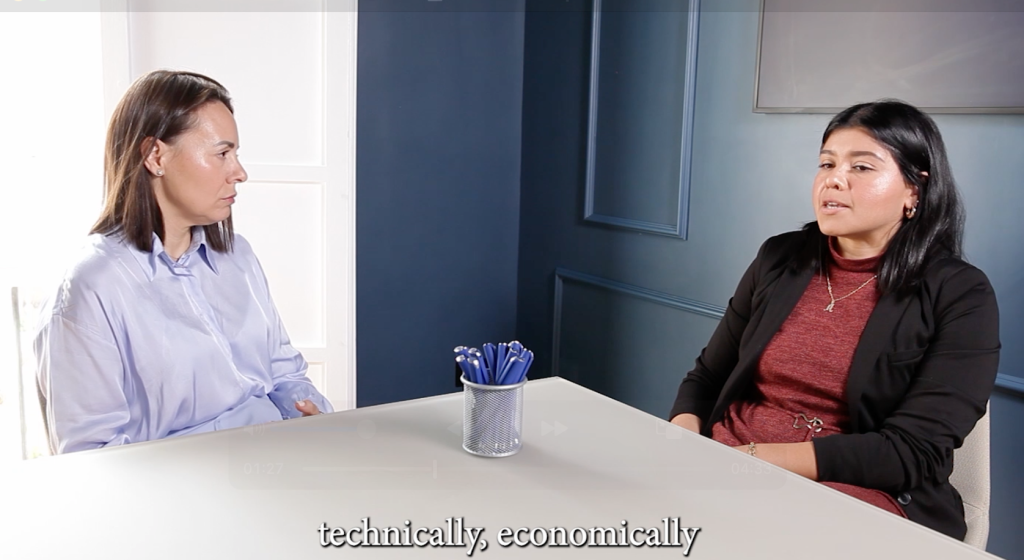
Initial advice for companies in the technology sector

In recent years, the tech industry has become one of the most active in attracting international talent and establishing new companies in Spain—especially in areas like Málaga. However, many of these companies face a very different labor and tax environment compared to their countries of origin.

📌 In this video, we speak with Alexa, Head of the Labor Department at MDG, about:

  • The main questions tech companies have when starting operations in Spain.

  • How to manage hiring in a highly competitive market.

  • Which aspects of the Spanish labor system cause the most confusion, from social security contributions to medical leave.

  • And how MDG responds to these needs with personalized advice and tailored guides for each client.

This is essential content for tech consultancies, startups, and international companies setting up in Spain who want to get things right from the start—legally and organizationally.

👩‍💼 Alexa clearly explains how we help build a strong foundation from day one.

How to Avoid Losing Money on Your Tax Return: Key Tips to Check Every Box

“Many People Lose Money on Their Tax Return Simply by Not Checking a Box”

The deadline to file Spain’s 2025 tax return (for the 2024 fiscal year) is June 30. With fiscal changes and new digital tools, this year’s campaign presents opportunities to optimize your return and avoid paying “a single euro more than necessary,” says Miriem Diouri, founding partner of MDG Asesores and expert in tax planning.

One of the most common mistakes? Not taking advantage of all available deductions. “Many people lose money simply by not checking a box,” Diouri explains. Deductions related to having children, paying rent, or making donations can significantly increase your refund — as can regional tax benefits, which vary depending on the autonomous community.

Additionally, contributions to pension plans can reduce your taxable base by up to €1,500 — or more if the contributor is a low-income spouse — making them especially valuable for those with medium or high incomes. While this is a deferred benefit, it can lead to substantial tax savings over time.

If you sold stocks, cryptocurrencies, or property at a loss, remember to declare those losses to offset current or future gains. Many people forget this and lose the opportunity to lower their tax bill.

Both employees and self-employed workers can claim specific reductions for work-related or economic activities. For freelancers, every deductible expense — from mobile phone bills to home office supplies — counts toward reducing their taxable income.

Deductions for maternity, large families, or disabilities can also add up to €1,200 and can be received in advance or claimed in your return. Even if you didn’t request the early payment, you can still claim it now — as long as you check the right boxes and provide the necessary information.

Finally, Diouri warns that the draft return provided by the Spanish Tax Agency (Hacienda) doesn’t always include all deductions or personal data. She recommends reviewing it carefully and, if possible, consulting a tax advisor to maximize your savings. “Thousands of taxpayers accept the draft without checking it and end up losing money,” she concludes.

https://www.elespanol.com/malaga/economia/20250508/miriem-diouri-asesora-fiscal-muchas-personas-pierden-dinero-renta-simplemente-no-marcar-casilla-trt/1003743746696_0.html?utm_source=whatsapp&utm_medium=social&utm_campaign=fixedbar

Spain: little-known fiscal tools that boost real investment

The Spanish Tax System Offers Little-Known but Highly Effective Tools for Investment

The debate around Spain’s tax system has been long-standing and, at times, polarized. While many criticize the allegedly high tax burden, other experts point out that Spain has solid instruments in place that make it possible to compete internationally—even against countries known for being tax havens or those with more aggressive regimes such as Ireland or the Netherlands.

That’s the view of Miriem Diouri, founding partner of MDG Asesores and an expert in tax planning, who emphasizes that beyond the stereotypes, Spain offers powerful and underutilized tax tools for those looking to start a business, invest, or relocate their operations to the country.

Three Key Tax Pillars You Should Know

Diouri highlights three major advantages within the Spanish tax system:

  • 15% Reduced Corporate Income Tax Rate for New Companies:
    Companies launching economic activity for the first time can benefit from a reduced 15% tax rate during their first year with a positive taxable base and the following year. While this incentive is not new, “it remains widely underused,” Diouri explains. This tax rate applies broadly, not just to tech startups, making Spain an attractive destination for real projects with active operations and local employment—especially in a European context where the average corporate tax rate is around 21–22%.
  • Special Tax Regime for Inbound Taxpayers (Beckham Law):
    This regime allows individuals moving to Spain to pay tax only on income earned within Spanish territory for a six-year period, at a fixed rate of 24% up to €600,000. Initially designed for professional athletes, the scheme has expanded to include executives, startup founders, and digital nomads—particularly after the introduction of the remote worker visa in 2023. In its first year, Spain received over 2,500 applications under this new migration framework, reinforcing its position as a globally competitive destination.
  • Foreign Securities Holding Company Regime (ETVE):
    Less known outside tax advisory circles but critical for international corporate groups, the ETVE regime allows Spanish-resident companies to receive dividends and capital gains from foreign subsidiaries tax-free, provided certain ownership and transparency conditions are met. This mechanism positions Spain as a hub for coordinating international investments, with added benefits such as a broad network of double taxation treaties, access to skilled talent, and political stability.

Spain: A Country with Specific Tax Advantages

According to Diouri, Spain does not aim to compete with low-tax jurisdictions through aggressive mechanisms. “It doesn’t need to,” she states. The country’s fiscal appeal lies in a technical and targeted approach—focusing on real economic activity. It’s not about flashy headline policies, but rather effective tools for those who understand and know how to use the system.

The message is clear: Spain offers a competitive, modern tax framework with advantages for investors and entrepreneurs looking to build real, long-term, and locally rooted projects.

https://www.elespanol.com/malaga/economia/20250522/miriem-diouri-asesora-fiscal-sistema-tributario-ofrece-herramientas-conocidas-eficaces-invertir-trt/1003743767868_0.html?utm_source=whatsapp&utm_medium=social&utm_campaign=fixedbar

Electronic notifications in 2025: What your company needs to know (and do) to avoid penalties.

Since the entry into force of Law 39/2015 on Common Administrative Procedure, the Public Administration has made decisive progress towards digitisation. One of the pillars of this transformation is electronic notifications, which now affect all legal
entities, registered professionals and a large proportion of citizens in their dealings with the various administrations.

Although this transformation has brought efficiency and cost savings, it has also generated significant legal risks for companies and self-employed workers:

unread notifications, deadlines that pass unnoticed, penalties that are consolidated due to lack of response…
That is why, in this post, we tell you which aspects continue to cause confusion and what you should do to protect your company´s interests.

1. What happens if I do not receive the notification by email or SMS?
When the government makes a notification available to you at your Authorised Electronic Address (DEHú), it must also send you a notification to the email  address or mobile phone number you have provided.

However, and this is key:
The law states that the notification is mandatory, but its absence, in certain cases, does not invalidate the notification.
This means that, even if you do not receive the email or SMS, if the document has been uploaded to your electronic mailbox, the deadline still starts to run. And if 10 days pass without you accessing it, it is considered automatically rejected, with all its
legal effects. The specific case would have to be reviewed and it would have to be considered whether or not a lack of defence has been caused, as the case law criteria on notices are not unanimous.

– Practical tip:
Make sure your contact details are up to date in the system, but above all:
 Check the DEHú at least once a week or use an automatic alert system.
 Do not rely solely on notifications. A technical failure, a spam filter or a
change of number can be very costly.

2. What happens if I receive the same notification in two different ways?
The Administration may notify you in two ways at the same time: for example, via the DEHú and also by post.
In these cases, the law states that:
The deadline for responding begins from the first valid notification, not from the last.

-Practical tip:
 If you receive two notifications about the same thing, check which one arrived
first and count the deadlines from that date.
 Don´t rely on the paper notification: if the electronic one arrived first, that´s
the one that counts.
 Keep an organised record of receipt dates to avoid mistakes.

3. How is the first notification to a company handled?
In theory, all legal entities are required to receive electronic notifications. But in practice, many small businesses have not yet created their DEHú or do not access it frequently.

The current regulations (RD 203/2021) clarify that:
If the Administration does not have your electronic details, it must send you the first notification on paper, with a clear warning that subsequent notifications will be electronic.
In other words, if you are not yet registered, the Administration cannot start directly by electronic means if it has no way of notifying you.

-Practical tip:
 Even so, don't wait for the first paper notification to arrive. Register your
company with the DEHú and start managing your electronic notifications now.
 If you outsource this task, make sure that whoever does it has experience
and is able to respond quickly.

5. What happens if you do not register with the DEHú?
Many companies believe that if they do not register, they ‘cannot be notified’. This is a serious mistake.

The Supreme Court has made it clear that:
You are obliged to receive electronic notifications as a legal entity, even if you have not registered with the mailbox.
The Administration can assign you an email address and upload notifications there. If you do not access them, they will be considered notified after 10 days.

-Practical tip:
 Voluntarily registering and managing your mailbox well is better than
leaving it to chance.
 Lack of access can mean loss of resources, the initiation of disciplinary
proceedings or the loss of subsidies.

Conclusion: electronic notification is not a formality, it is a critical control point. In 2025, electronic notifications are no longer a novelty. They are the standard way of communicating with the Administration. And each one can have significant legal and
financial consequences if not managed properly.

From our office, we recommend:
 Establish a reliable notification control system.
 Train your team (or seek external advice, such as ours) to manage deadlines,
resources and responses in a timely manner.
 Do not blindly trust notifications: the responsibility lies with you.

-Can we help you manage your electronic notifications?

We offer you our services in DEHú management, alerts, deadline review and legal defence. Because an unread notification can cost you much more than good advice.

MDG Advisors.

Commercial obligation: deadlines related to the annual accounts.

Play Video


After filing the taxes for the first quarter, in our firm we continue to move forward with the IRPF campaign. But it is also time to focus on an obligation that often goes unnoticed: the approval and presentation of the annual accounts.

📌 If your company closed fiscal year on December 31, 2024, remember that:

You have until June 30, 2025 to approve the accounts in General Meeting.

And until July 30, 2025 to file them with the Commercial Registry.

This is established by the Capital Companies Act, and it is a direct responsibility of the administrators, presidents or secretaries of the company.

🎥 In this video we explain in detail what obligations this process entails, what the key deadlines are and how to comply with them correctly.

A useful reminder for companies looking to keep up to date with their legal and mercantile duties.

Four Key Tips to Optimize Your Tax Bill as a Trader in Spain

If you’re a stock trader and a tax resident in Spain, proper planning can make a significant difference in your annual tax bill.

From MDG Advisors, we share four essential tips to legally and efficiently optimize your tax burden:

1. Offsetting Gains and Losses: Spain allows you to offset capital losses against gains for up to four
subsequent tax years. Keeping a detailed record of your trades is essential to take full advantage
of this benefit.
2. Timing Your Sales: Deferring the sale of profitable assets to a future tax year may reduce your tax
liability if you anticipate lower income or carry-forward losses during that period.
3. Two-Months Rule: If you incur a capital loss and purchase identical securities within two months
of the sale, that loss will not be deductible until you sell the newly acquired securities.
4. Using International Accounts: Some international brokers offer more tax-efficient structures to
avoid early withholdings or improve the quality of tax reporting. Always comply with Spain’s
foreign asset reporting obligations (Modelo 720).

Should you want to receive more tips or information, please do not hesitate to contact MDG Advisors
Pablo Mallo Bárcena – MDG Advisors

Exemption from wealth tax on shareholdings in companies: Key points and requirements.

Although we are currently immersed in the income tax campaign, we cannot forget about wealth tax
(despite the 100% rebate offered in the Autonomous Community of Andalusia) and, linked to this, the tax
on large fortunes.

In this blog, we will focus on wealth tax.

Wealth tax (IP) is levied on the net worth of individuals and is a tax transferred to the Autonomous
Communities. Within the set of assets and rights subject to the tax, there are certain exemptions,
including those relating to shareholdings in entities. The purpose of this exemption is to encourage
business activity and prevent the tax from penalising productive investment.

Legal basis:
The legal basis for this exemption is found in Article 4. Eight. Two of Law 19/1991, of 6 June, on Wealth
Tax. This provision establishes the conditions that must be met for holdings in certain entities to be
exempt from taxation.

Scope of application:
The exemption may apply to:
Direct or indirect holdings in companies. However, in both types of holdings, the minimum
percentage requirement for participation in the company must be met.
Both commercial and professional companies, provided they meet the requirements.

Requirements for exemption
In order to benefit from this exemption, three main sets of requirements must be met simultaneously:
1. Economic activity requirements
The investee must effectively carry out an economic activity. Such activity shall not be deemed to exist
where the main asset consists of securities or real estate not used for business purposes.
Automatic exclusion: So-called ‘asset-holding companies’ —those whose main activity is the holding of
assets— are excluded from the scope of this exemption.

2. Participation and control requirements
The taxpayer must hold at least 5% of the capital individually or 20% jointly with their spouse,
ascendants, descendants or collateral relatives up to the second degree.

In addition, they must exercise effective management functions in the company and receive
remuneration for this representing more than 50% of their total business, professional and employment
income.

3. Valuation Requirements
The exemption applies to the value of the shares proportional to the assets used for economic activity,
i.e. not all of the shareholding is exempt if part of the company’s assets are not linked to the business
activity.

Frequent Cases of Application
-Family businesses: The exemption allows shareholdings in family businesses to be tax-free,
encouraging business continuity between generations.
-Active directors or partners: Those partners who actually participate in the management of the
company, and not as mere passive investors, are the main beneficiaries of this tax advantage.

Incompatibilities and Exclusions
-If the entity is purely patrimonial, the exemption does not apply.
-It also does not apply to holdings in entities which, although formally commercial, do not carry out
a real or relevant economic activity.
-The exemption does not apply automatically: it must be justified each year in the tax return,
proving compliance with the requirements.

Review by the authorities
The Directorate-General for Taxation (DGT) and the courts have issued numerous binding rulings and
judgments interpreting the scope of the requirements. In particular, the management function and the
proportionality of remuneration are examined in detail to prevent abuse or simulation.

In conclusion, the exemption of shares in companies from wealth tax is a key tax tool for promoting
investment in family businesses and protecting the productive fabric. However, its application requires
strict compliance with legal requirements and proper documentation and justification.

In an environment of increasing tax control, it is advisable to carry out adequate wealth planning and,
where appropriate, seek specialised advice to ensure the legitimate application of this exemption.

At MDG Advisors, we remain at your disposal if you are particularly interested in applying the Wealth Tax
exemption discussed in this blog.

Leticia Cayuela Mayor.

Renta 2024: Main tax changes

Play Video

Income tax return 2024: what you need to know


This year brings important changes. All self-employed people will have to file a tax return, regardless of their income. The limit for filing a tax return if you have two or more payers is reduced to €15,876. Landlords who rent will be able to apply new tax reductions of 90%, 70%, 60% or 50%, depending on the contract and conditions. Deductions for donations are also extended, reaching up to 45%, and for energy efficiency works. A single system is established to correct errors in the self-assessment. In addition, aid for DANA 2024 will be exempt, the deduction for childcare will be increased by €1,000, and rent will be deductible if paid by credit card.

New Waste Collection Tax in 2025.

In 2025, a new waste collection tax will come into effect that will impact all taxpayers in Spain.
This measure, mandated by Law 7/2022 on waste and contaminated soils, responds to a
European directive requiring that the cost of collecting, transporting, and treating urban waste
be borne by those who generate it. The purpose of this tax is to balance the financing of
municipal services and to encourage more responsible waste management.

The cost of this new tax will not be the same for everyone. It will depend on several factors,
including the cadastral value of the property and the level of waste generation in the
neighborhood where it is located. In general terms, it is estimated that an average household
will pay between €120 and €160 per year, while a commercial premises may pay between
€300 and €400 annually. However, there will be significant differences depending on the area
in which you live.

The calculation of this tax is based 81% on the cadastral value of the property and 19% on the
average amount of waste generated in each neighborhood. This means that more polluting
neighborhoods will pay higher rates, while areas with more sustainable habits will benefit from
a lower charge. The aim is to incentivize more environmentally friendly and equitable
behavior, although the system has also drawn criticism due to its complexity and the unequal
impact it may have on low-income families living in higher-value areas.

If you belong to a vulnerable group, it is important to know that municipalities may apply
discounts. Families with three or more children, recipients of the Minimum Living Income,
individuals with low income, and owners of vacant properties or premises may be eligible for
reductions. Each municipality will define the specific criteria and conditions for granting such
benefits, so it is advisable to consult your local council as soon as possible.

During the second half of 2025, taxpayers will receive an official notification indicating the
amount they are required to pay. The first payment will be made in a single installment that
same year; however, from 2026 onwards, there will be an option to pay in multiple
installments.

In summary, the new waste collection tax will affect everyone to a greater or lesser extent. It is
important to stay well-informed, check with your local council to determine whether you
qualify for any reductions, and prepare for this new expense arriving during the year. While
the financial impact is clear, the measure also presents an opportunity to move toward a more
sustainable and equitable model of communal living.

Teresa Romero Navas